
Reimagining pumping station delivery to meet network demand
With 42% of customers located in rural areas, Anglian Water operates over 4,300 pumping stations, each playing a vital role in maintaining resilient water supply infrastructure.
Traditional delivery methods for booster pumping stations were time-intensive, requiring multiple trades on site over several weeks, often in remote and logistically challenging environments.
Anglian Water engaged us to develop a more efficient and scalable solution, one that could increase pumping capacity quickly, reduce cost, and improve safety and environmental performance across its network.
Developing a standardised, production-led solution
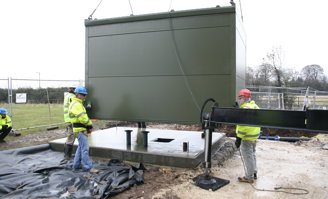
We redefined the approach by developing a standardised, offsite-manufactured solution for pumping stations, shifting delivery from a bespoke, site-based model to a repeatable, industrialised process.
The solution introduced a configurable product platform, enabling project teams to select and adapt designs based on required pumping capacities, ranging from 5 to 50 litres per second. This standardisation significantly reduced design and engineering time while enabling consistent quality across installations.
The new approach also incorporated a digital configurator, allowing Anglian Water’s project teams to specify requirements quickly and efficiently, with additional options for finishes, security, alarms and other operational features.
By optimising layouts and material usage, we reduced the physical footprint of each station, enabling transportation as a single unit and, in some cases, removing the need for planning applications.
Driving efficiency, safety and sustainability through offsite delivery
The transition to offsite manufacturing delivered substantial improvements across programme, cost and environmental performance.
The standardised design reduced total project costs by over 35% compared to traditional build methods, while significantly shortening delivery timelines. Manufacturing in a controlled factory environment improved quality and eliminated the need for extensive on-site rework.
Offsite production also reduced reliance on heavy civil works, minimising the need for concrete, trenching and working at height. This led to safer installation processes, particularly in remote locations where weather conditions and access constraints typically increase risk.
The approach also contributed to a lower carbon footprint, reducing vehicle movements, site activity and material waste, while enabling a more streamlined and predictable delivery process.