Redefining how commercial buildings are designed and delivered
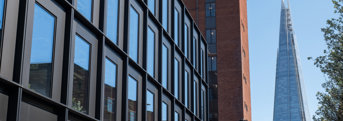
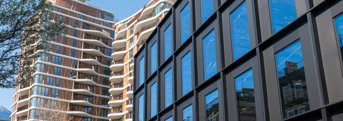
The Forge is the UK’s first large-scale commercial office development designed using a platform-based ‘kit of parts’ approach, built on a Platform Design for Manufacture and Assembly (P-DfMA) structural frame.
Developed for Landsec, the scheme comprises two eight-storey buildings totalling approximately 13,000m², and is targeting net zero carbon in construction.
We played a key role in developing, manufacturing and installing the MEP ‘kit of parts’, helping to shift the project from a traditional construction model to a product-based approach focused on repeatability, efficiency and long-term performance.
Early engagement enabled us to influence design decisions from the outset — challenging material selection, logistics, and delivery methodologies to unlock the full benefits of platform-based construction.
Applying a platform-based, kit of parts approach to MEP delivery
The P-DfMA approach created a standardised yet flexible system of components, enabling designs to be developed from a library of pre-engineered elements rather than starting from first principles.
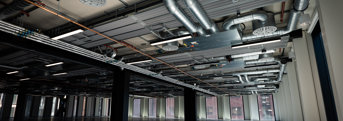
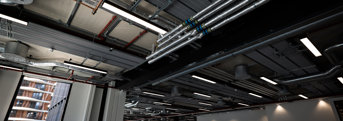
This approach significantly accelerated both the design and construction phases, while ensuring consistency and quality across the development. We developed the full MEP distribution strategy as a kit of parts, manufactured offsite and assembled on site as integrated systems.
A highly collaborative design environment, bringing together structural, architectural and MEP teams, enabled continuous optimisation of the solution. Physical mock-ups were developed during the design stage, allowing ideas to be tested, refined and embedded before construction commenced, reducing uncertainty and eliminating rework on site.
The final solution includes approximately 4,500 prefabricated modules, eight fully integrated risers and a fully modularised roof, demonstrating the scalability of the platform-based approach.
Driving sustainability, efficiency and industry transformation
Offsite manufacturing played a central role in reducing embodied carbon, improving productivity and enhancing quality. The project achieved measurable reductions including:
95% reduction in capital cost (MEP KOP efficiencies contextually referenced)
13% programme reduction
40% reduction in steel usage
50% fewer site operatives
24% reduction in embodied carbon overall.
A total of 324 tonnes of carbon was saved through the use of offsite solutions, with additional benefits including 35,600km fewer vehicle movements and a reduction of over 20,000 site hours.
Manufacturing in a controlled environment enabled better material utilisation, reduced waste through reuse of offcuts, and improved quality assurance by eliminating defects typically associated with traditional site-based construction.
Beyond the immediate project, the platform-based approach establishes a blueprint for future developments, enabling repeatable design, faster delivery, improved operational efficiency and reduced lifecycle costs across Landsec’s wider portfolio.