
Unlocking energy performance and cost savings through data-led optimisation
Improving building performance doesn’t always require major capital investment, but it does require visibility, insight and the ability to act on data.
At 3 Hardman Street, we worked in partnership with Knight Frank and 4D Monitoring to transform how building performance is understood and managed, using digital analytics to identify inefficiencies, reduce energy consumption and deliver measurable cost savings.
By leveraging the building’s existing energy management platform, the team implemented a targeted optimisation strategy focused on eliminating waste, improving system performance and reducing unnecessary energy use, particularly outside of operational hours.
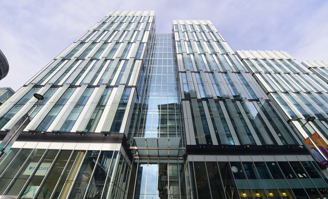
Turning building data into actionable insight
Rather than introducing new infrastructure, the approach centred on making better use of existing systems.
Using 4D Monitoring’s analytics platform, we analysed energy-consuming assets across the building to identify patterns of inefficiency, including plant operating outside of required hours and systems not aligned to occupancy or demand.
This data-led approach enabled rapid identification of improvement opportunities, allowing targeted interventions to be implemented with minimal disruption and cost.
By focusing on optimisation rather than replacement, the project demonstrates how digital tools can unlock significant performance gains from existing assets, supporting both cost reduction and carbon targets.
Delivering measurable performance improvement
Since implementation, the building has achieved substantial reductions in both energy consumption and operating costs, demonstrating the value of continuous monitoring and active performance management.
Crucially, these improvements were delivered through low initial investment, reinforcing the role of digital optimisation as a highly effective route to decarbonisation across existing estates.
The approach also supports ongoing performance improvement, with continuous monitoring enabling further refinement and long-term efficiency gains.
Driving smarter, lower-carbon buildings through digital optimisation
This project highlights how data-led strategies can play a critical role in reducing energy consumption and operational carbon across existing buildings.
By combining building analytics with engineering expertise, we helped unlock hidden inefficiencies and deliver immediate, measurable improvements, without the need for significant capital investment.
As organisations look to decarbonise their estates, this approach provides a scalable, low-risk pathway to improving performance, turning data into action, and action into tangible results.